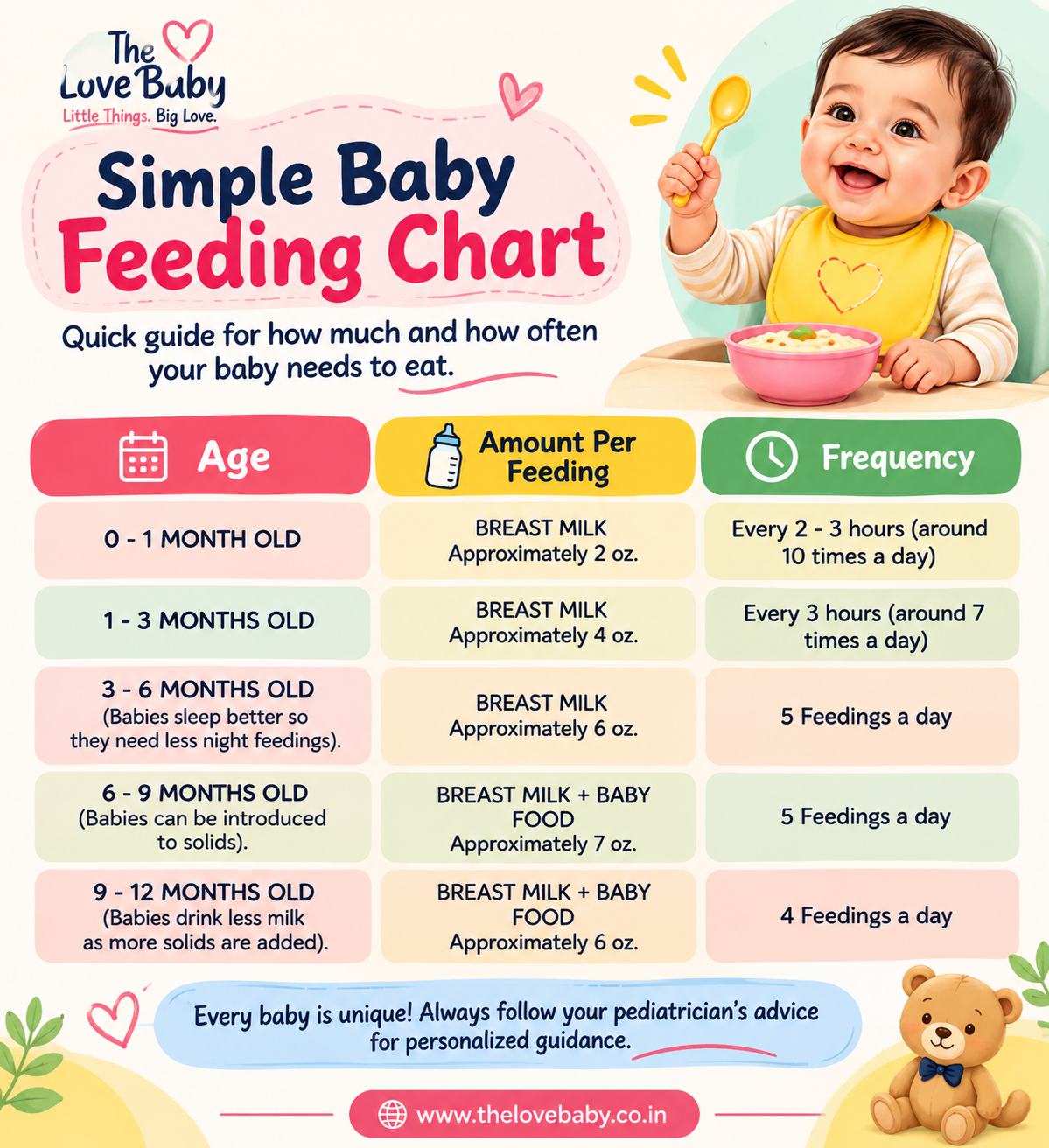
Feeding your baby changes as your little one grows. During the first year, parents move from newborn feeding and breastfeeding support to the exciting first tastes of family foods. This guide is designed for Indian parents and caregivers who want a simple overview of the main feeding stages from birth to 12 months.
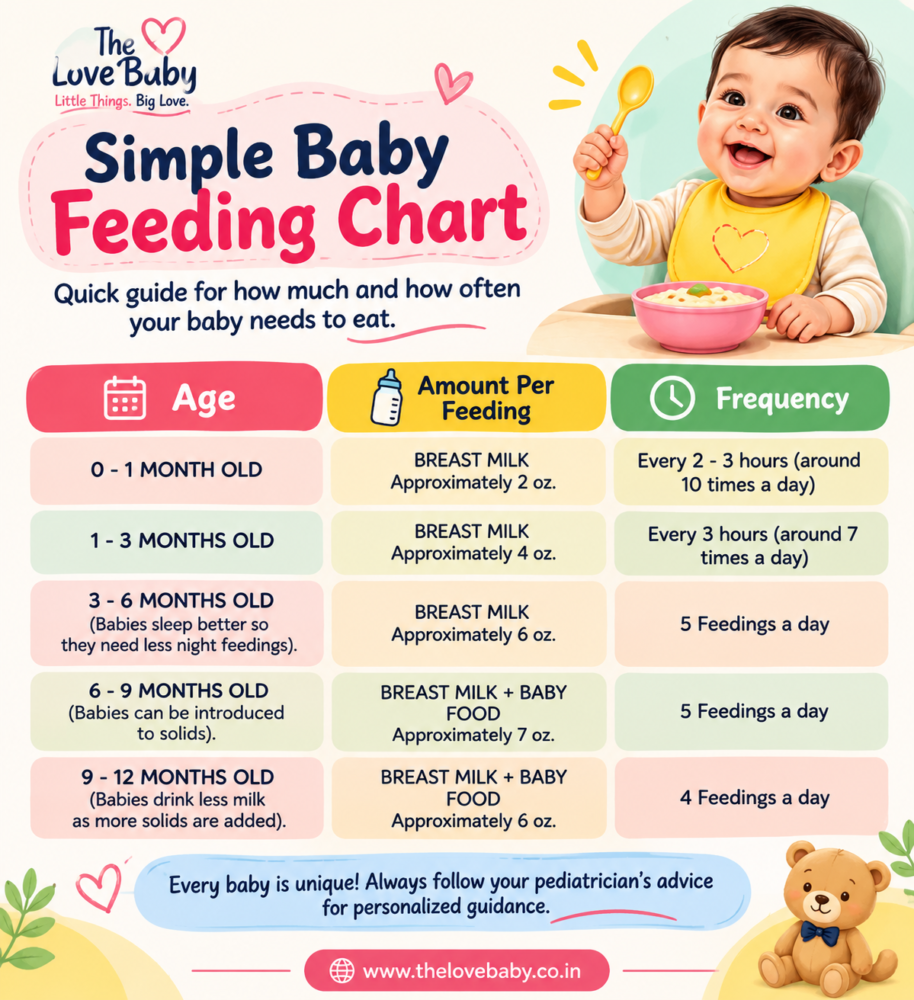
Birth to 6 months: breast milk is the recommended food
Indian national guidance and WHO/UNICEF recommendations support starting breastfeeding as soon as possible after birth, ideally within the first hour, and exclusive breastfeeding for the first six months. Exclusive breastfeeding means breast milk only, with no additional water, honey, ghutti, juice or other foods. Medicines, vitamins or oral rehydration solution may be given when advised by a health professional.
Feed responsively: look for your baby’s hunger cues and offer feeds whenever your baby wants, during the day and night. Babies do not all follow the same clock-based schedule, and a fixed number of ounces or feeds is not suitable for every child. If breastfeeding is difficult, painful, or you are worried about milk supply or weight gain, contact your paediatrician or a qualified lactation counsellor.
Around 6 months: begin complementary foods
At around six months, breast milk alone no longer meets all of a growing baby’s nutrition needs. Start complementary foods when your baby is developmentally ready, while continuing breastfeeding. Begin with soft, thick, mashed or appropriately textured foods, and gradually increase variety, texture and quantity as your baby learns to eat.
Indian food ideas to discuss with your paediatrician
- Soft, well-cooked and mashed dal or khichdi.
- Mashed seasonal vegetables such as pumpkin, carrot or sweet potato.
- Mashed fruit such as banana, papaya or stewed apple.
- Iron-rich foods and suitable protein sources, including well-cooked pulses, egg, fish or meat where these are part of the family’s diet and introduced safely.
- Plain, unsweetened, pasteurised full-fat yoghurt can be an option in an age-appropriate texture; ask your clinician about suitable dairy choices.
Offer a variety of foods rather than relying on one food every day. Avoid making meals watery; thick, nutrient-dense textures help provide more nutrition in a small serving. Always adapt texture to your baby’s skills and supervise every meal.
6 to 8 months: practise with soft foods
WHO guidance describes two to three complementary meals a day for breastfed babies aged 6–8 months, alongside continued breastfeeding. Start with small amounts and increase gradually according to appetite and ability. Some babies need time to accept new tastes and textures. Offer patiently and let your baby show when they are hungry or full.
9 to 12 months: build variety and texture
As babies develop chewing and self-feeding skills, gradually move from smooth purees to mashed, lumpy and soft finger foods that are safe for their developmental stage. WHO guidance for breastfed children aged 9–23 months recommends three to four complementary meals daily, with one or two nutritious snacks if desired, while breastfeeding continues.
Family foods can be adapted by cooking them until soft, removing bones and hard pieces, and avoiding added salt and sugar. Babies need variety across food groups, including grains and starchy foods, pulses, vegetables, fruits and suitable protein-rich foods.
Foods and feeding practices to avoid
- No honey before 12 months, because of the risk of infant botulism.
- Avoid added salt, sugar, sweet drinks, packaged juice, biscuits, chips and other highly processed snack foods.
- Avoid choking hazards such as whole nuts, popcorn, whole grapes, hard raw vegetable pieces, large chunks and foods with bones. Prepare foods in safe shapes and textures for your baby’s stage.
- Do not force-feed or distract your baby to make them eat. Respond calmly to hunger and fullness cues.
- Never leave a baby alone while eating. Seat the baby upright and supervise closely.
Food hygiene matters
Wash your hands before preparing food and feeding your baby. Use clean utensils, freshly prepared food and safe drinking water. Cook foods thoroughly, store them safely and do not reuse food that has been in your baby’s bowl after feeding. Keep your baby’s eating area and utensils clean.
When should you ask a paediatrician?
Seek professional advice if your baby is feeding poorly, has fewer wet nappies than expected, is not gaining weight as expected, repeatedly vomits, coughs or chokes during feeds, has difficulty swallowing, or you have concerns about allergies or food reactions. Premature babies and babies with medical or developmental conditions may need an individual feeding plan.
A gentle reminder for parents
There is no single feeding timetable that fits every baby. Growth, appetite, development and health all matter. Use this article as general educational information, not as a substitute for medical advice. Follow your paediatrician’s guidance for milk intake, formula preparation if formula is used, food introduction, supplements and your baby’s growth.
For more baby-care information and baby essentials, visit The Love Baby.